
Smarter routines.
A calmer setup.
Useful home automation should fit the people who live with it. Start with a routine, then choose devices that support it.
Useful home automation should fit the people who live with it. Start with a routine, then choose devices that support it.
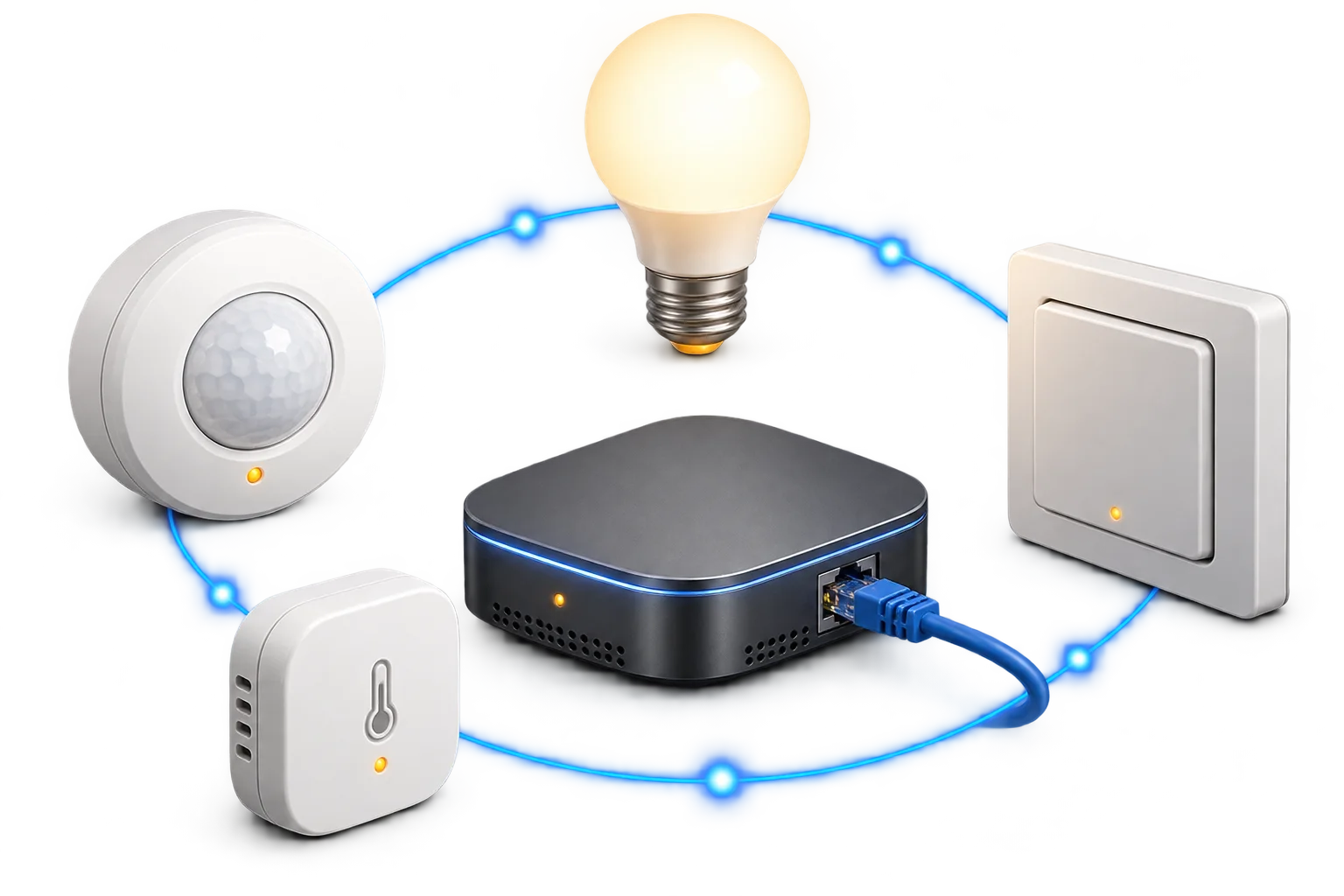
Motion · light · temperature
Rules & manual controls
Lighting · climate · shading
A light, a temperature reading or a clear notification is often a better first project than a house full of unrelated devices. Agree what should happen and how someone can still control it manually.
List the controller, integrations, device protocols and outside services that the routine depends on. Local control can reduce some dependencies, but every component still needs maintenance.
Consider a controller restart, a device battery running low and an internet connection that disappears. Describe the expected behaviour so a temporary outage does not become a mystery.
Keep a device map and recovery notes with the household. Installation help can be useful, but the finished system should remain understandable to the people who rely on it.
Network planning, homelab setup, smart home and everyday IT. Build it yourself, or bring us in where it helps.
Discuss your setup